The Zeigarnik Effect: Why Unfinished Stories Make People Click — Harsh Sahu
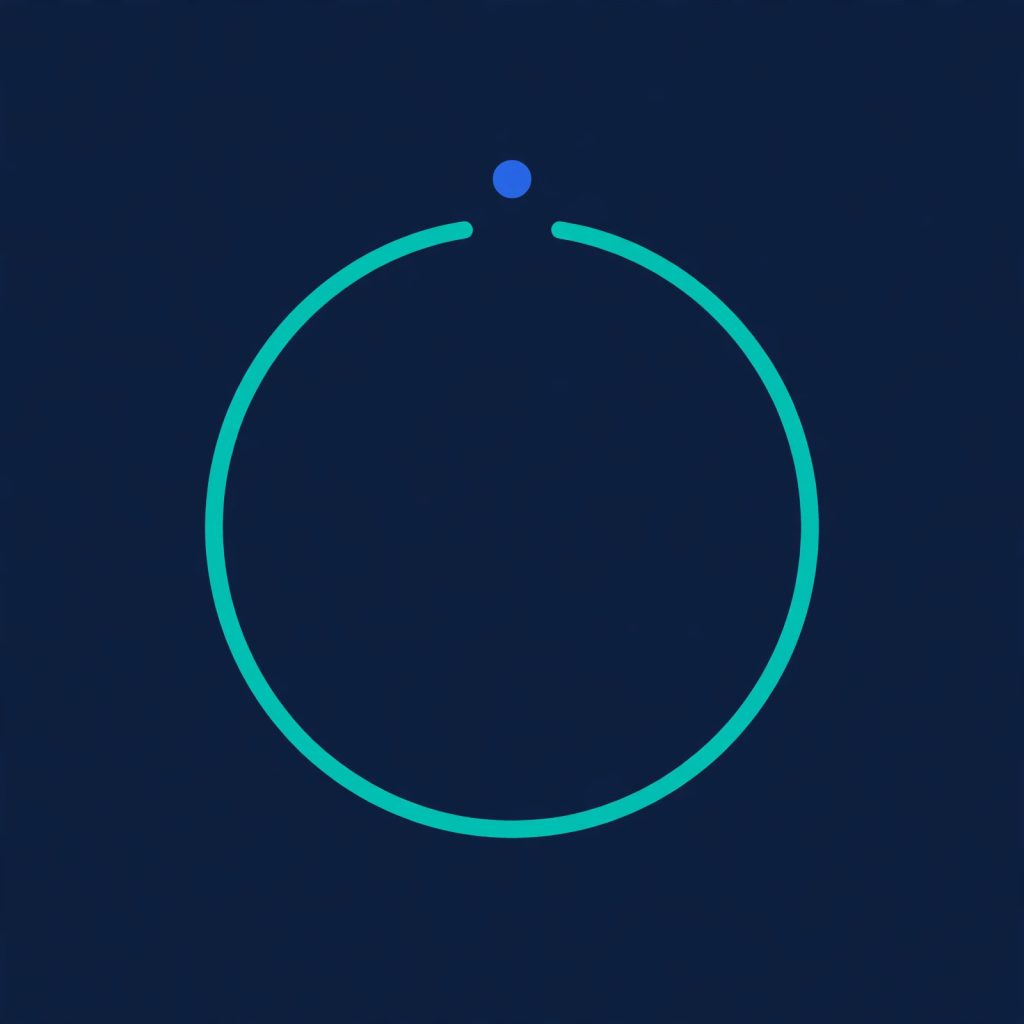
Your brain hates an unfinished story. Start a sentence and stop halfway, and something in you itches to hear the end. That itch has a name — the Zeigarnik effect — and it is one of the most useful forces in advertising.
In the 1920s, psychologist Bluma Zeigarnik noticed that waiters remembered complicated orders perfectly until the bill was paid — and then forgot them instantly. The mind holds unfinished tasks open and drops finished ones. An open loop stays alive in memory. A closed one gets filed away and forgotten.
Now look at most ads. They close the loop before the person has even clicked. “We offer the best skin treatments in the city. Book now.” Everything is said. Nothing is unfinished. The brain files it away in a second — because there is nothing left to wonder about.
The ads that stop the scroll do the opposite. They open a loop and leave it open until the click:
- “The one mistake most clinics make in their first ad — and it costs them half their budget.” The mistake is unnamed. The loop stays open.
- “She tried three treatments before this one. The fourth worked — here’s why.” The story is unfinished. The brain wants the ending.
- “Your ad is getting clicks but no bookings. The reason is not your ad.” The answer is withheld. The click closes the loop.
This is the same mechanism behind every cliffhanger you have ever binged. The difference is that in advertising, the loop must be honest. Open a loop you can actually close. If the landing page does not answer the question the ad asked, the person feels tricked — and tricked people do not book. The loop is a promise, not a trap.
Here is the decision rule for your next ad: before you publish, ask — “Does this ad leave one genuine question unanswered?” If the answer is no, you have written a brochure. Rewrite the first line so it opens a loop: name the problem, hint at the cause, withhold the answer until the click.
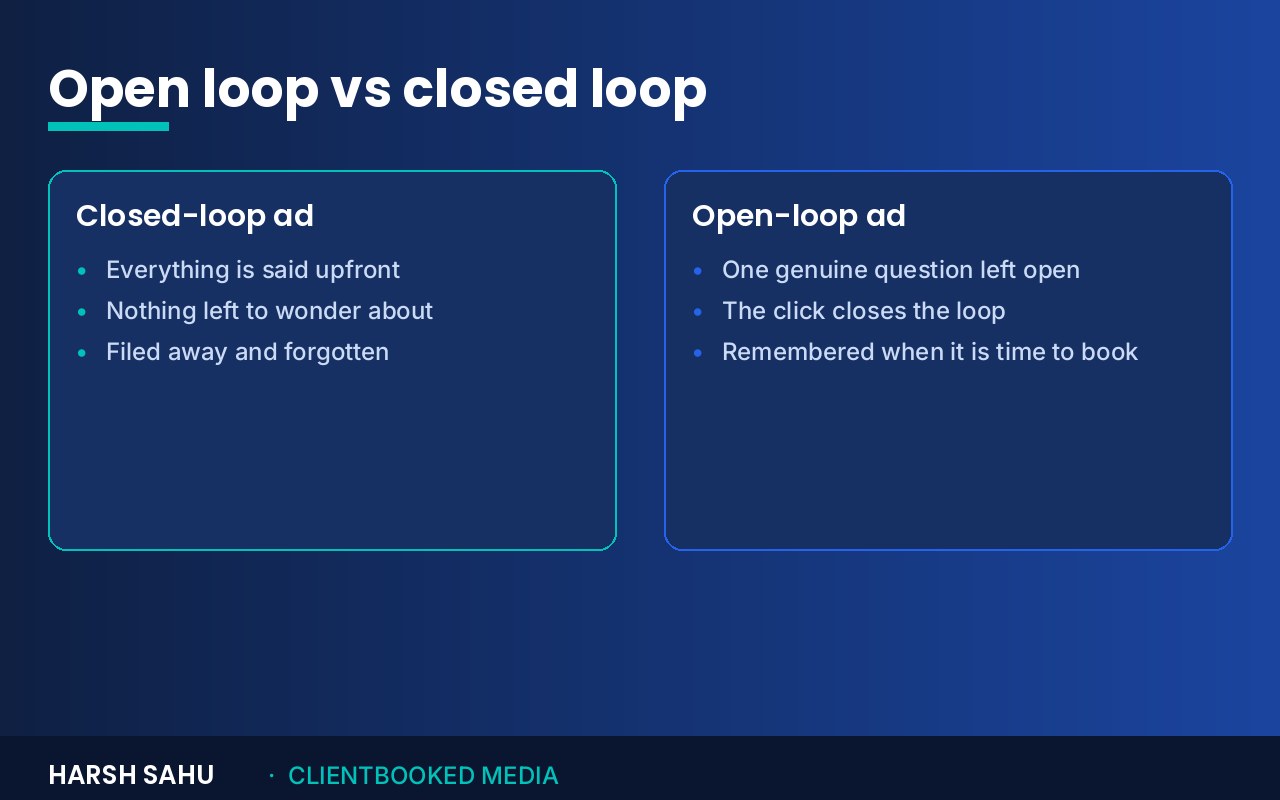
One warning: a loop is not clickbait. Clickbait opens a loop it never closes. The Zeigarnik effect works because the brain trusts that the ending exists. Keep that trust, and the same brain that could not forget your unfinished sentence will remember your business when it is time to book.
I wrote about what happens in the first three seconds of an ad — the moment the loop either opens or dies — here: https://harshsahu.in/the-first-3-seconds-psychology-ad-lives-or-dies-harsh-sahu/
Harsh Sahu is the founder of ClientBooked Media, where he builds psychology-led Facebook and Instagram ad campaigns for appointment-based businesses. Read more at https://harshsahu.in/what-i-do/ — or book a call at https://harshsahu.in/contact/.

Harsh Sahu
Performance marketer specialising in psychology-led Meta ads, offers and funnels for booked consultations. More about Harsh Sahu →